Tickets
English
USD
Language
Currency
Contents

Hualapai Tribe | Guardians of the Grand Canyon West Rim

Grand Canyon ToursHualapai Tribe

If you’ve ever visited the Grand Canyon Skywalk or taken a helicopter down to the canyon floor at the West Rim, you’ve already stepped onto Hualapai land. The Hualapai Tribe owns and manages this portion of the Grand Canyon, ensuring that visitors experience its wonder while preserving its deep cultural and spiritual meaning. Learn more about the Hualapai people, their history, and their sacred connection to one of the most breathtaking landscapes on Earth.

Hualapai Indian Reservation | An overview
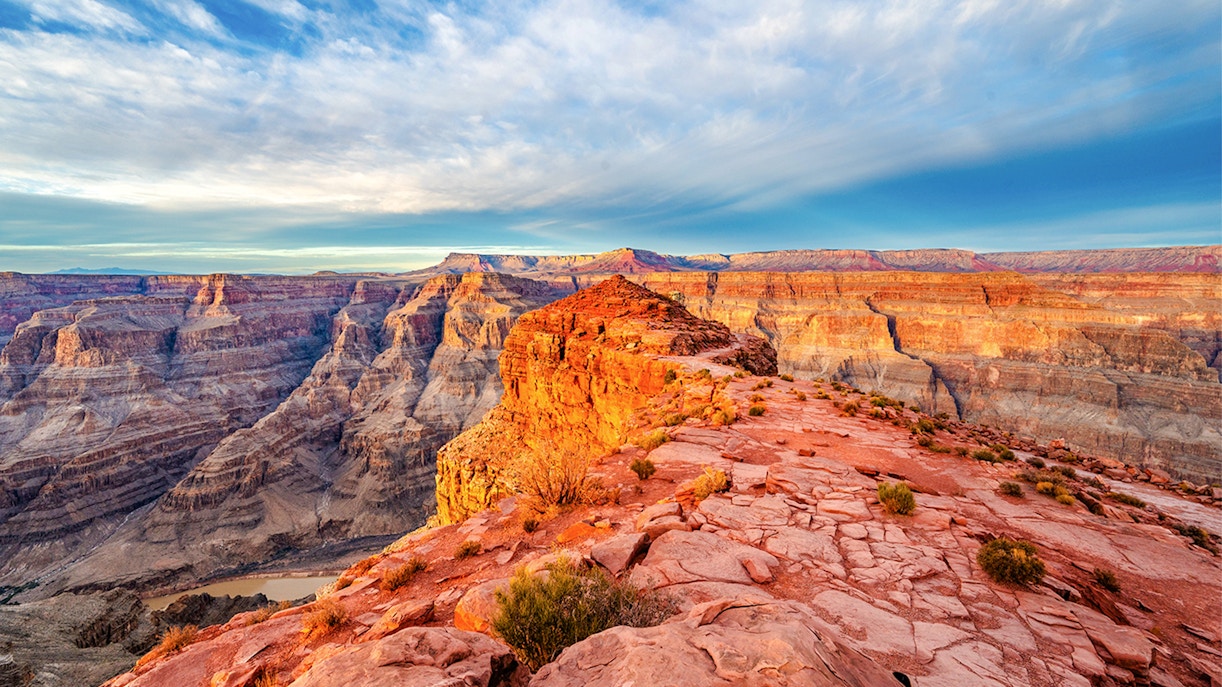
Aerial view of Grand Canyon West with red rock formations and expansive canyon landscape.
  • Also known as: The People of the Tall Pines
  • What it is: A federally recognized Native American tribe and sovereign nation responsible for the Grand Canyon West.
  • When the Hualapai Reservation was established: 1883
  • Area: Approximately 1,142 square miles (730,000 acres)
  • Location: Northwestern Arizona, near Peach Springs.
  • Members: Around 2,300 enrolled members, with about 1,600 residing on the reservation.
  • Language: Hualapai, an Upland Yuman language.
Did you know?

The Hualapai language is part of the Yuman-Cochimí family and is still taught in schools on the reservation to help preserve tribal heritage and identity.

Did you know?

About the Hualapai people

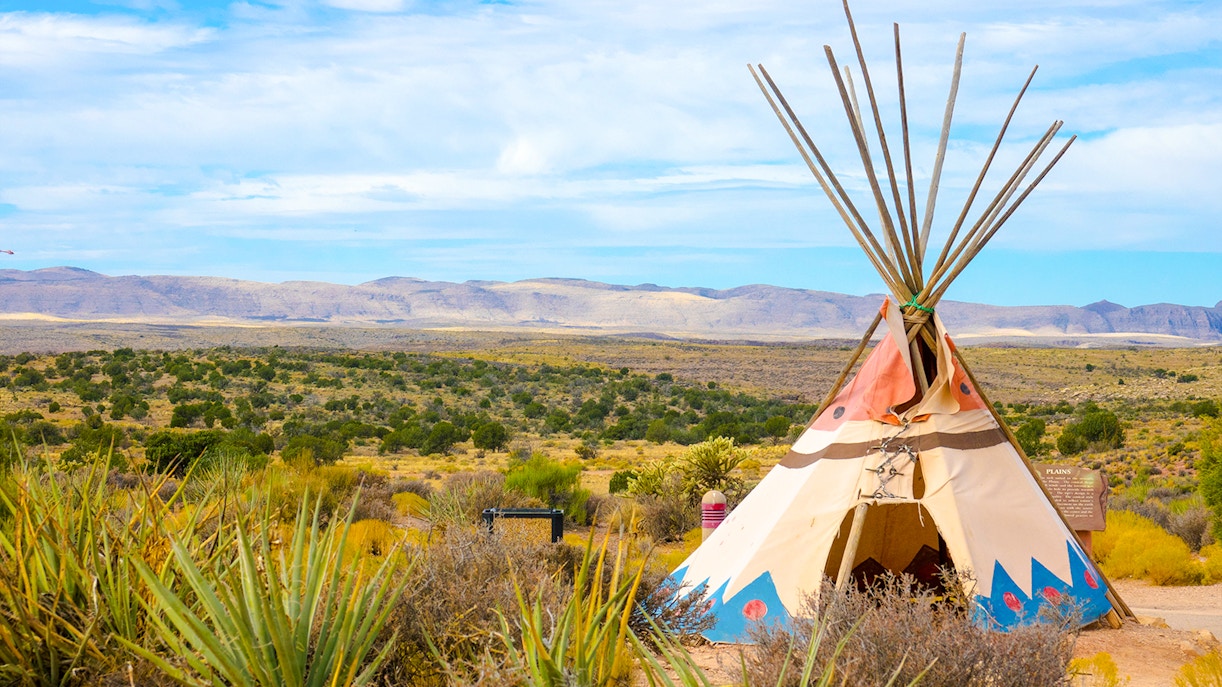
Indian tent in West Rim, Grand Canyon with desert landscape in background.

The word Hualapai (pronounced “Wal-lah-pie”) means “People of the Tall Pines.” Historically, they were semi-nomadic, living across a vast region that stretched from the Colorado River to the pine-covered plateaus of the Hualapai Mountains.

The Hualapai lived by hunting deer, antelope, and small game, and gathering native plants, nuts, and berries. Their social organization was built around extended family groups, and their movements followed the rhythms of the land, from the river in summer to the high plateaus in winter.

Despite centuries of external pressure and displacement, the Hualapai people have maintained a resilient connection to their land and culture. Their values of harmony, stewardship, and respect for nature continue to guide their way of life today.

Centuries of resilience: How the Hualapai shaped their homeland

  • Pre-1800s: The Hualapai people thrive as hunter-gatherers, living in family bands across northwestern Arizona.
  • 1860s: Conflict with settlers and miners leads to the Hualapai War (1866–1870), resulting in loss of life and forced displacement.
  • 1874: Surviving members are relocated to the Colorado River Reservation but eventually return to their ancestral lands.
  • 1883: The US government establishes the Hualapai Reservation by executive order, centered around Peach Springs, Arizona.
  • 1900s: The tribe continues to develop schools, infrastructure, and local governance.
  • 2007: The Grand Canyon Skywalk opens on Hualapai land, offering visitors a glass-bottomed view 4,000 feet above the canyon floor.
  • Today: The Hualapai manage Grand Canyon West as a cultural and tourism enterprise, balancing preservation with economic independence.

Hualapai Tribe & the Grand Canyon

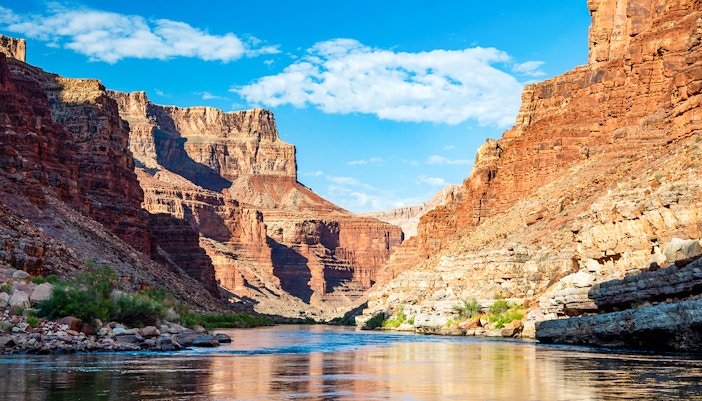
Colorado River flowing through the Grand Canyon with towering red rock cliffs.

Mythology & legends

  • Creation stories: According to Hualapai tradition, the world emerged from a time of darkness into light when ancestral spirits shaped the canyon and river. The Colorado River is often seen as a living being, a lifeline connecting the people to their past and their future.
  • The coyote and the flood: Hualapai oral traditions tell of a great flood that reshaped the canyon’s form. Coyote, a trickster figure common in Native lore, plays a role in teaching humanity about respect and humility toward the forces of nature.
  • Sacred spaces: Many places along the canyon are considered portals to the spirit world. Elders say that echoes within the canyon are voices of ancestors reminding visitors to tread gently and listen to the land.
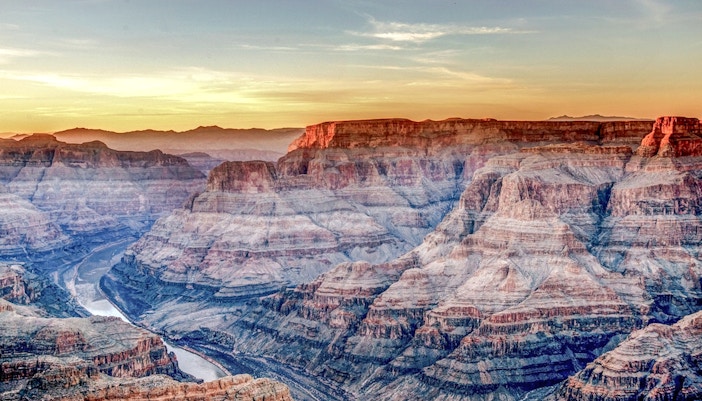
Grand Canyon West Rim at sunset with layered rock formations and river below.

Spiritual significance

To the Hualapai, the Grand Canyon is not just a natural wonder, it is a living, breathing entity that embodies their creation, survival, and spirituality.

The canyon’s walls represent the layers of time and the stories of the people. The Colorado River below symbolizes renewal and life, while the wind that sweeps through the rim carries the voices of ancestors.

Before beginning ceremonies or major events, the Hualapai often offer songs or prayers to the canyon, acknowledging the spirits that dwell within it.

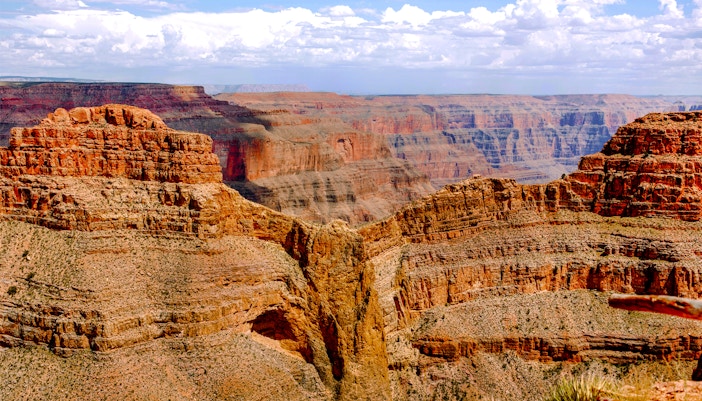
Grand Canyon West view at Eagle Point, showcasing layered red rock formations, USA.

Relationship with the land

  • Earth: The canyon’s cliffs and mesas are seen as the bones of the Earth Mother, whose spirit provides balance and guidance.
  • Water: The Colorado River is both sacred and practical. It is a source of life, purification, and spiritual continuity.
  • Sky: The vast skies over Grand Canyon West are tied to Hualapai cosmology, representing the upper world where the spirits reside.
  • Harmony: The interplay of rock, water, and air is seen as a reflection of balance and interdependence, values central to Hualapai philosophy.

Tourism & its impact on the Hualapai Tribe

  • Growth: Tourism at Grand Canyon West has provided the Hualapai Tribe with vital economic opportunities, creating jobs in hospitality, operations, and guiding. The revenue helps fund education, healthcare, and cultural programs on the reservation.
  • Preservation through management: The tribe owns and operates Grand Canyon West and the Skywalk, ensuring that development aligns with their environmental and spiritual principles. Visitor access is managed carefully to minimize ecological disruption.
  • Education and awareness: Every Hualapai guide shares stories and cultural insights that help visitors understand the canyon’s deeper significance beyond its visual beauty.
  • Challenges: Balancing tourism with environmental protection remains an ongoing effort. The tribe continues to advocate for sustainable tourism practices to protect sacred spaces from overuse and erosion.
  • Empowerment: Grand Canyon West has become a model of indigenous self-determination. It shows how Native nations can preserve their heritage while creating pathways for future generations.

Learn more about Grand Canyon West here >


Book Grand Canyon West Rim tours

Las Vegas to Grand Canyon West & Hoover Dam Bus Tour with Optional Skywalk Entry
Free cancellation
Book now, pay later
10 hr
Transfers included
More details
From Las Vegas: Grand Canyon National Park Tour
Free cancellation
Book now, pay later
13 hr - 14 hr
Transfers included
Meals included
More details
Grand Canyon West Rim Entry Tickets with Skywalk Access
Free cancellation
Book now, pay later
Flexible duration
Meals included
More details
from
$113.85
45-min Grand Canyon National Park Airplane Tour with Optional Hummer Tour
Free cancellation
Book now, pay later
45 min - 3 hr
More details

Frequently asked questions about the Hualapai Tribe and the West Rim

Why is Grand Canyon West managed by the Hualapai Tribe?

Grand Canyon West sits on Hualapai tribal land and is fully owned and operated by the Hualapai Tribe. Managing the site allows the tribe to protect their ancestral lands, share their heritage with visitors, and create sustainable income that supports education, healthcare, and infrastructure for their community.

What does the Grand Canyon mean to the Hualapai people?

For the Hualapai, the Grand Canyon is a sacred place filled with ancestral stories and spiritual meaning. It’s seen as a living landscape that connects the people with the earth, the river, and the sky, reminding them of balance and the cycles of life.

Are there customs or traditions I should be aware of before visiting?

Respect for the land and its people is very important. Stay on marked trails, avoid disturbing plants or rocks, and ask permission before photographing Hualapai people or cultural demonstrations. Listen to your guides and approach the experience with curiosity and gratitude.

How does tourism benefit the Hualapai Tribe?

Tourism at Grand Canyon West, including attractions like the Skywalk, Eagle Point, and Guano Point, is one of the tribe’s main sources of revenue. The income helps fund essential community programs such as schools, healthcare, and housing while providing job opportunities for hundreds of Hualapai members.

What’s the best way to show respect when visiting Hualapai land?

Treat the canyon as a sacred space rather than a sightseeing stop. Walk quietly, follow tribal rules, and listen to the stories shared by Hualapai staff. They’re an important part of keeping this cultural landscape alive and protected.

What time zone does the Hualapai Reservation follow?

The Hualapai Reservation, including Grand Canyon West, follows Mountain Standard Time (MST) year-round, the same as Arizona. It does not observe Daylight Saving Time, so be sure to double-check your tour departure times if you’re starting from Las Vegas.