Travel back in time with Grand Canyon Railway | Scenic train rides to the Canyon

The Grand Canyon Depot was designated a National Historic Landmark in 1987, and the entire railroad was added as a National Historic District in 2000. Keeping the cultural and historical significance of the Railway aside, the journey also makes for a memorable, scenic, and entertaining ride, and a great way to begin your trip to the Grand Canyon.

Grand Canyon Train | An overview

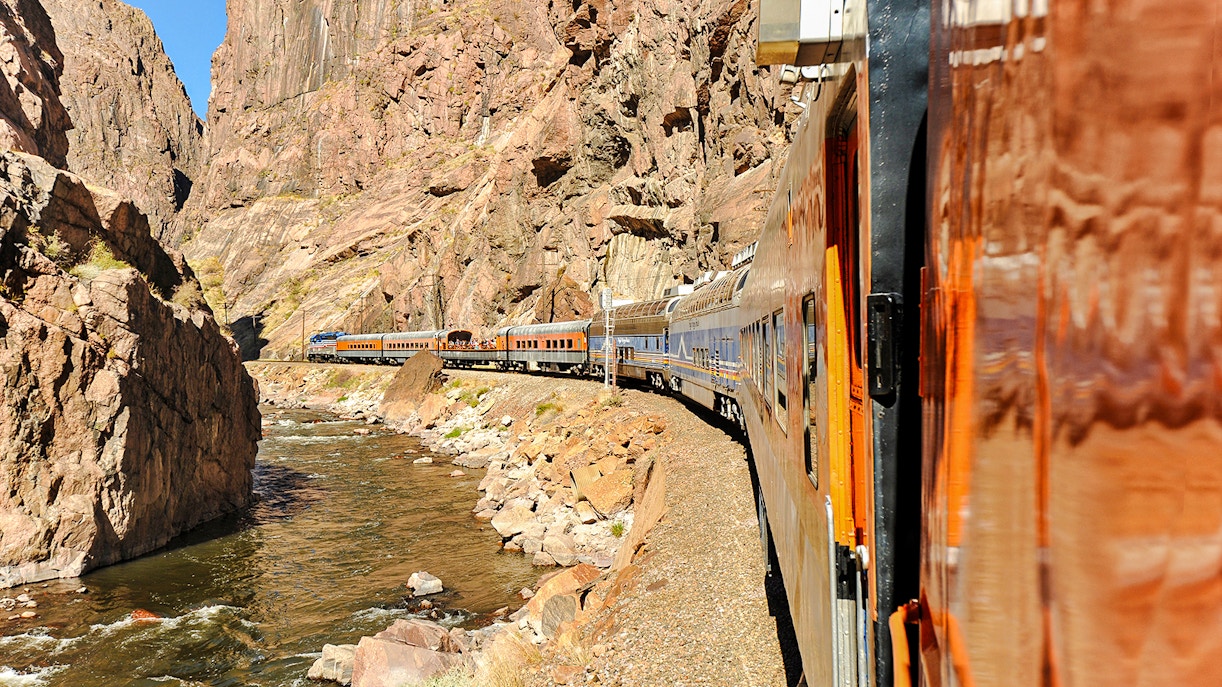
Royal Gorge train crossing a bridge over the Arkansas River in Colorado.

The Grand Canyon Railway has been frequently credited for the surge in tourism at the Grand Canyon since the beginning of the twentieth century.

Apart from the heritage factor of the ride on the Grand Canyon Railway trains, the tour promises non-stop wonders that start even before you get onboard! The shenanigans of the Cataract Creek Gang and the Marshal will keep you thoroughly entertained while the scenery outside, changing from high desert to prairie to pine, will keep you mesmerized throughout. There are 6 classes of cars, and you can even enjoy drinks and snacks in some of the classes.

  • Timings:
    From Williams, AZ: 9:30am MST (January 1 to October 31) & 8:30am MST (November 31 to December 31)
    From Grand Canyon Depot: 3:30pm MST (January 1 to October 31) & 2:30pm MST (November 31 to December 31)
    The Grand Canyon Railway does not operate on Christmas. Sometimes, during peak season, a second train may operate to manage the crowd.
  • Departure point: Santa Fe Railway Station in Williams | Find on Maps
  • Final stop: Grand Canyon Depot in Grand Canyon National Park, South Rim | Find on Maps
  • Duration: 2 hr 15 mins

What to expect on your journey

Robbers' ambush

On the return trip, watch out for a mischievous attempt at robbing your train. Hold up your hands as the robbers collect your valuables (usually money held up voluntarily by the passengers) and give you high-fives in exchange!

The face-off

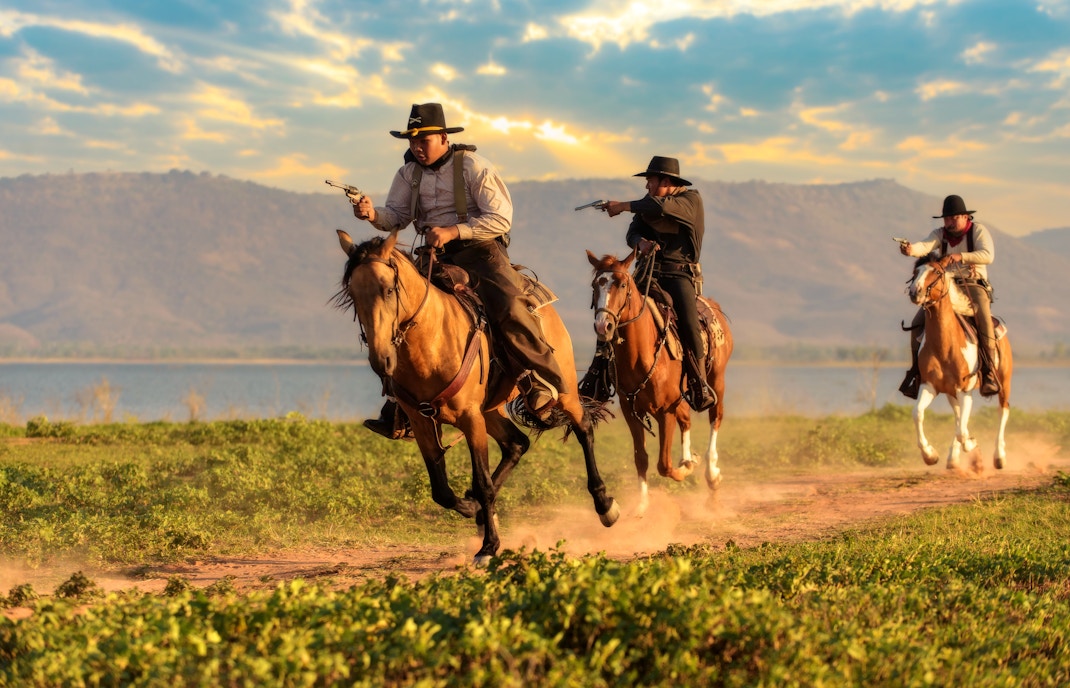
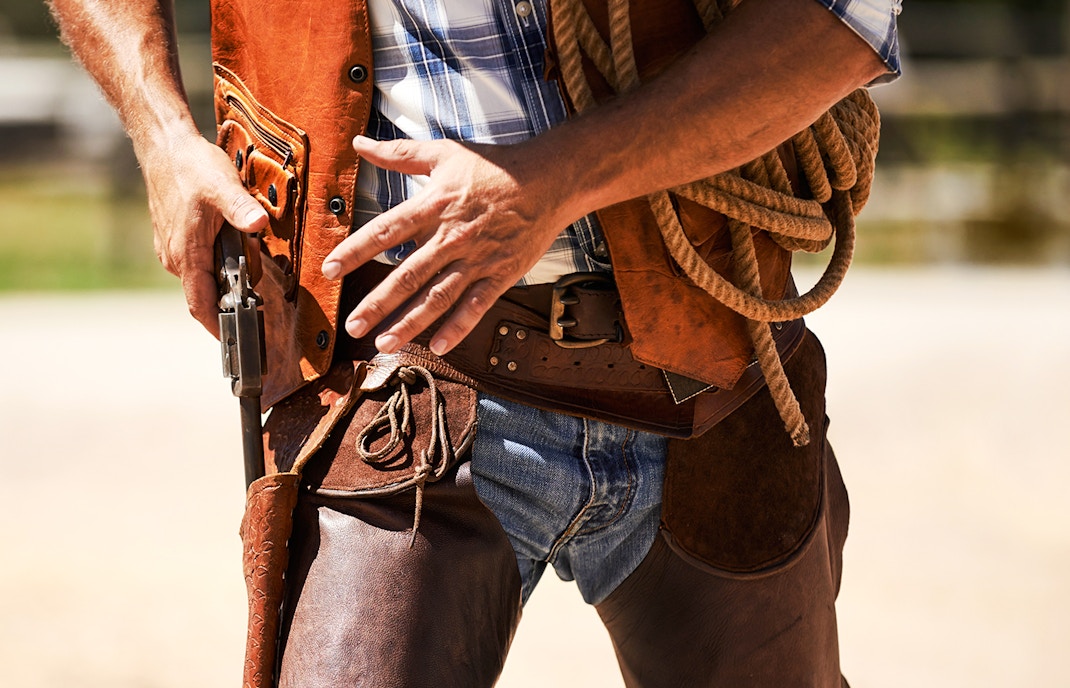
Every day, the Grand Canyon Railway experience starts even before you get on the train. Watch as the Cataract Creek Gang and the Marshal confront each other at the Williams Depot, giving you a glimpse of life at the Wild Wild West in the days of the ruling cowboys.

Spectacular scenery and exciting serenade

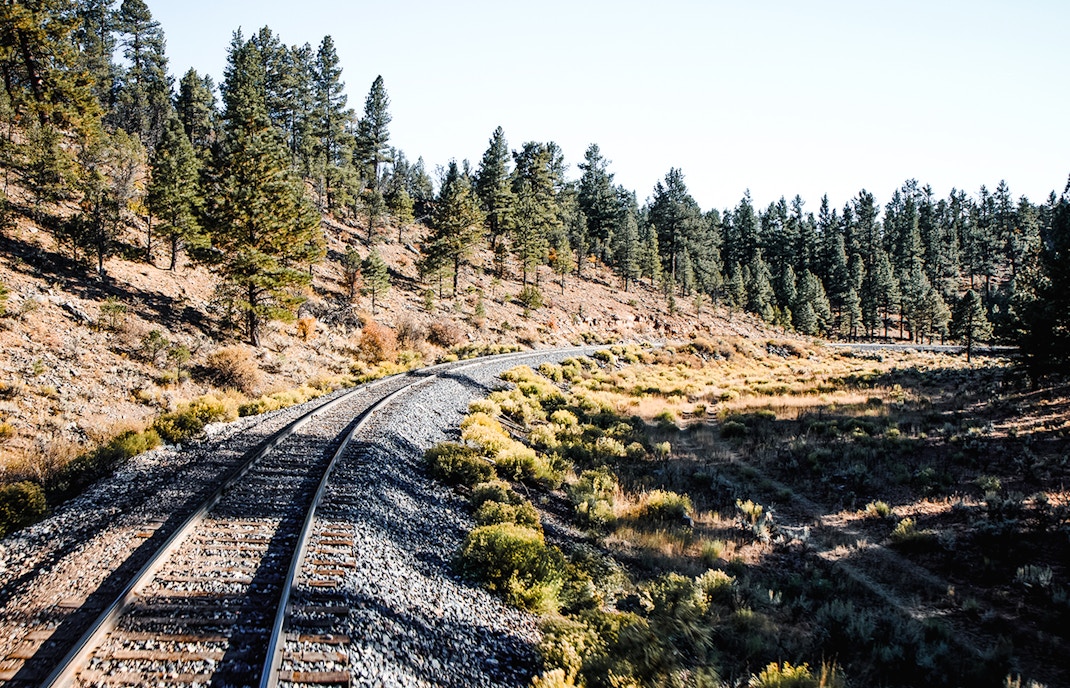
Once you get onboard, you'll see the scenery change from arid lands to the prairie to the pines. The large viewing windows on the train give you unparalleled views of the Grand Canyon area, the wildlife around, as well as the San Francisco Peaks. All this while live musicians provide the perfect background track for your journey. You can even participate in a little jig before the rain reaches the South Rim.

Special trains

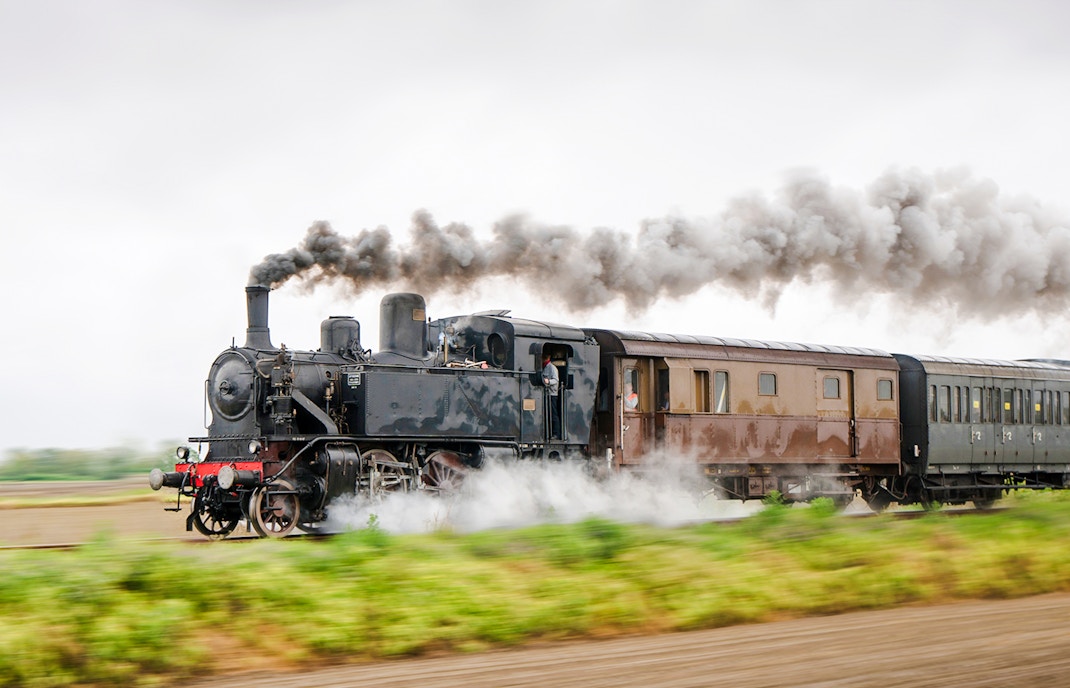
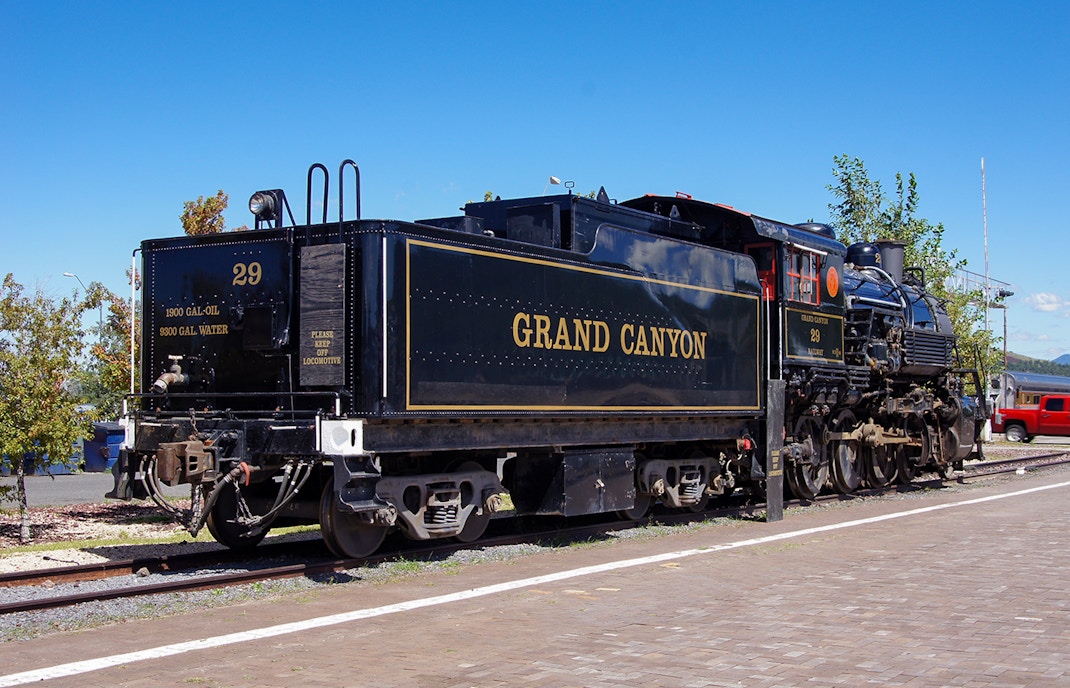
Usually, trains are pulled using diesel locomotives on a regular basis. However, there are a few special days when you can ride the train being pulled by steam locomotives, too! The steam engines run the first Saturday of each month from March to October and on some other designated days of celebration. The Polar Express, a winter tradition, is another special train that runs from November through January at 5:30pm and 7:30pm, and the trip lasts about 90 minutes. Seats are limited, so make sure you book accordingly!

About the Grand Canyon Railroad & Grand Canyon Depot

1901 - 1999

1901: The Grand Canyon Railway is established at Williams, Arizona, by the Atchison, Topeka, and Santa Fe Railway. It starts ferrying passengers and freight to the South Rim of the Grand Canyon.
1903: President Theodore Roosevelt visits the Grand Canyon aboard the Grand Canyon Railway.
1905: Charles Whittlesey, the Chief Architect for the Atchison, Topeka, and Santa Fe Railway, builds the El Tovar, and the Fred Harvey Company starts operating it as a destination resort, catering to visitors who arrive by train.
1968: The Santa Fe ceases passenger operations because of rising automobile traffic. Freight services continue.
1974: Freight operations on the Grand Canyon Railroad are also stopped.
1989: Passenger trains start running again under the ownership of Max and Thelma Biegert, entrepreneurs from Nebraska, who had purchased the railroad the previous year.
1999: The Grand Canyon Railway gets recognized in the National Register of Historic Places.

2000 - Present

2006: The Biegerts sell off the Grand Canyon Railway to Xanterra Travel Collection, a park-management company with ties to the original Fred Harvey Company, which was a collaborator of the Santa Fe in the early days of the Grand Canyon railway.
2008: Xanterra stopped using steam locomotives to reduce the railway's environmental impact and save fuel costs.
2009: The Grand Canyon Railway receives the ISO 14001 award for environment-friendly operations. Xanterra reintroduces steam locomotives, modified to use waste vegetable oil collected from restaurants all over Northern Arizona as fuel and harvested rainwater.
2024: The Grand Canyon Railway gets a $3.4 million grant to start a zero-emission train. The plan is to convert one of the classic diesel locomotives into a battery-powered one.

Things to do in Grand Canyon Village

Kolb Studio

Emery Kolb and Ellsworth Kolb were brothers who arrived at the canyon via the Grand Canyon Railway in its early days and later became two of the most famous passengers of the train in local lore. They built the Kolb Studio from 1904 to 1926 and established a booming business taking pictures of visitors descending the Bright Angel Trail and selling them as keepsakes. Today, the restored and preserved studio is a popular spot for those interested in exploring the canyon's early history and the pioneers who contributed to the region's thriving tourism economy.

Lookout Studio

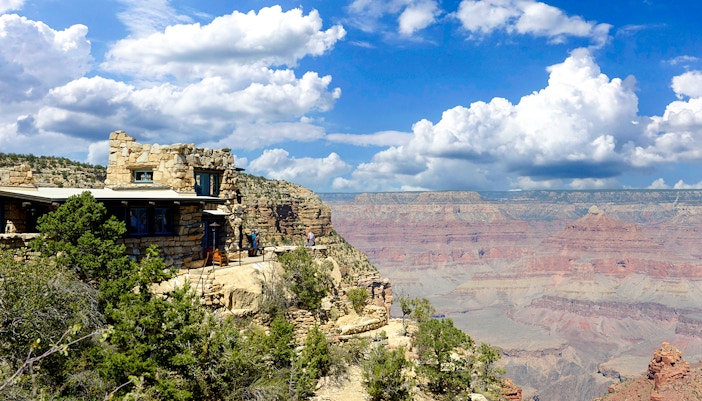
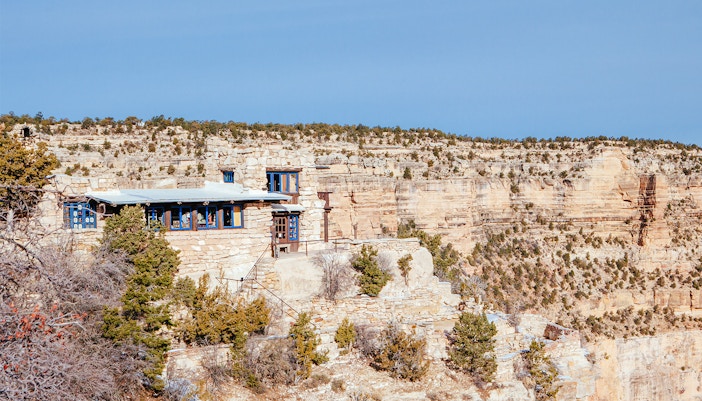
Made of stone and log timbers and standing proud at the edge of the canyon in the Grand Canyon Village, the Lookout Studio was built by Mary Colter as a spot from which visitors could enjoy panoramic views of the canyon, use telescopes to look up close, buy trinkets, and click photographs from a unique perspective. Inspired by the natural rock forms in the area and the indigenous American Indian architectural style, this structure has undergone few alterations since it was built in 1914.

Hopi House

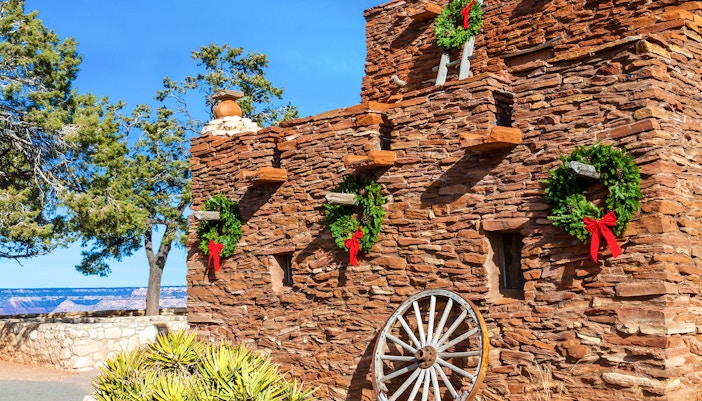
A historic building made in 1905, the Hopi House was designed by Mary Colter, who was inspired by the 1,000-year-old Pueblo houses constructed by the Hopi community that has inhabited the area for centuries. The structure has the traditional Hopi architectural elements. It is a great place to glimpse into the culture of the Hopi and to collect some beautiful Native American arts and crafts as souvenirs.

Frequently asked questions about Grand Canyon Railway

Yes, if you book your tickets online, the Park entry fee gets added to your ticket price when you make your purchase.

More reads

Yavapai Geology Museum

Yavapai Geology Museum

History

History

Facts

Facts